Date: 29/05/2023
Sound Recordings of Machinery Collections Showcase
Reflective Diary
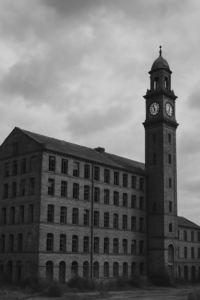
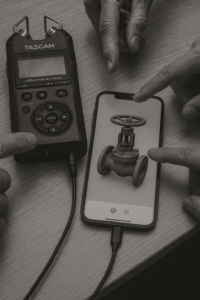
For a long time, the significance of sound in conveying industrial heritage has been overlooked by both traditional and online museums. It was not until after the COVID-19 pandemic that the importance of multimodal engagement during visits began to be taken seriously (Pan, 2021). At Calderdale Industrial Museum (CIMA), I conducted a field recording project focused on capturing the operating sounds of industrial machinery using two consumer-grade devices: the iPhone 13 Pro and the TASCAM DR-07 recorder. The aim was to test the practicality and sound fidelity of mono and stereo formats for use in both online and on-site multisensory exhibitions. Multi-channel recording equipment was not tested again here because it was already tested in Practice Log 1 (using the Zoom H3-VR), and it was found that this multi-channel ambisonic audio, while providing immersive recordings that allowed for spatial positioning at the recorder’s location, had inaccessible sound layers and issues with sonic masking (louder sounds obscuring quieter ones, see Practice Log 1 for more information).
In this practice, I revisit and reflectively analyse ambisonic audio in conjunction with mono and stereo formats.
The motivation for this project came from practice 1 and the conversation I had with CIM volunteers, which is not just about technical exploration, but also to pose a curatorial and theoretical question: what does it mean to hear a machine in a heritage space? Visual display is typically seen as showing objects, but the sounds of machinery carry emotional, spatial, and temporal information, which I have mentioned in the literature review of my PhD thesis (e.g. Chapter 2.1.2). They are traces of vitality, labour, wear, and rhythm that visual data alone cannot convey.
During fieldwork at Calderdale Industrial Museum, I recorded the sounds of multiple individual machines. Interestingly, conversations with curators and volunteers revealed that many had never consciously listened to these exhibits as discrete sonic events, which are undifferentiated and unclassified. This is a natural phenomenon, as Marshall McLuhan (1968) said in War and Peace in the Global Village, “one thing about which fish know exactly nothing is water, since they have no anti-environment which would enable them to perceive the element they live in” (p.175). A video on social media triggered me to think that sound has deeper meanings and should be given more attention in this situation (http://xhslink.com/o/4zSKMPV3vdg. This video shows unusual noises from different parts of the car.). Thus, my project became a dual intervention of exposing the curators’ neglect of sound and highlighting the narrative potential of soundscapes.
The equipment tests revealed distinct characteristics when listened to in isolation:
- The iPhone’s mono recordings were clean but flat, suitable for capturing single sound features, but because the sound is identical in both ears, it is insufficient for providing spatial positioning capabilities or a sense of distance.
- The TASCAM’s stereo recordings offered a richer depth than mono, but they lacked the ability for the participant to actively explore precise directionality.
- The Zoom H3-VR’s tasted in practice 1, its multi-channel ambisonic audio provided the ability to actively explore a 360-degree sound environment and roughly locate the sound source, but without a properly set up recording environment, this positioning was not accurate, due to spatial and echoic interference.
This analysis is based on recordings of individual exhibits but not on playback within a virtual environment, and it also assumes the target audience has binaural hearing.
As mentioned in Practice Log 1, the most significant technical challenge was the sound fog, which is echoes and reverberation, sometimes obscuring sonic details. The hearing loss I have exacerbated this challenge, which has limited my ability to spatially decode stereo recordings. However, surprisingly, this heightened my sensitivity to ambisonic formats, as they do not assume audiences are all able to hear from both ears, instead inviting listeners to orient their bodies toward sounds, which restores agency to digital listening.
This experience also pushed me to reconsider the perceptual capacities of different sound formats, not just from a technical perspective, but also phenomenologically. While mono recordings (such as those from the iPhone in this practice) captured the identity of machine noise, they flattened its spatial context. In contrast, the TASCAM’s stereo configuration, especially in its binaural setup, allowed me to feel a more textured form of auditory orientation. For example, I could feel the machines not as abstract sources of sound, but as embodied presences within a sound field. This distinction aligns with earlier audio research suggesting that stereo formats enhance spatial decoding, while mono confines sound to an informational role.
In some cases, the shift from mono to stereo recordings made previously imperceptible relationships (e.g. distance and location) between machines audible due to the comparison between left and right ears, such as the rhythm of oscillation or the contrast between background hum and focused motion (due to my hearing issue, I spotted this change by switching the earphones on my left and right ears over and over again, and also by seeing the difference of the sound wave between left and right sound channels). I think it is very interesting to see how this research was developed and iterated. I started this research as a comparative equipment test, which gradually became an inquiry into sonic narrativity: how sound formats encode not only technical data, but also sensory and interpretive cues. This was not just about sound fidelity, but also about acoustic legibility, which is the capacity to place oneself inside the soundscape, rather than just listening from outside.
In short, if the sound aims to provide a perception of distance and location of the objects in the sound environment, then the difference in the volume and fidelity of sound waves in the left and right channels is required to be accurate. This mimics the way we hear sounds with our ears in the real world, and the sound can be collected and delivered binaurally at a low cost. These results confirm that even small institutions can incorporate sonic information into their digital storytelling with minimal investment, and hopefully offer visitors a more immersive experience (Bartlett & Bartlett, 2016; Dorritie, 2003). However, is our only goal to provide participants with an understanding of the source’s direction and distance? What changes will occur if the aforementioned audio formats are used in a virtual online museum environment? Will these advantages and disadvantages remain consistent? Can sound have an impact on participants beyond location and distance?
Thus, this will be the key focus of the next stage of this research, as I argue that sound is not merely directional, but it also envelops, lingers, and surrounds the listener and activates embodied engagement (Kahn, 1999). This is the inclusive, multisensory participatory experience that should be provided to audiences in online museums.
Reflective Methodological Note
In this project, I was not only a translator between media (machines and recordings) but also between epistemologies: translating between the seen and the heard heritage. My role shifted between technician and listener, curator and visitor, researcher and sensory subject. This was an interesting process, and its multiplicity mirrors the multifaceted nature of sound itself.
By collecting sounds with those devices and analysing their effects, I realised that fidelity is not the only criterion, and even if it is important in some circumstances, the contextual relevance, interpretive clarity, and emotional resonance are equally crucial. Noisy, imperfect sounds may convey authenticity and connectedness more effectively than clinically perfect recordings.
Importantly, this project enabled me to rethink the concept of immersion.
Many institutions equate immersion with “the presence of technology,” but, as discussed with CIM staff, true immersion requires sensory integration. Overreliance on vision can isolate, while layered sound encourages interactivity, ambiguity, and memory. As recent academic studies suggest, multisensory digital heritage must move beyond spectacle towards situated embodiment (Lim, Khan & Picinali, 2021; Pietroni, 2025).In practice, I encouraged participants to think about what the sound of machines means to them, and I realised they need to be “pulled out of the water”: not only to hear machines as exhibits that are normal for them, but also to stand in the shoes of museum visitors who are experiencing these sounds for the first time. This change could reveal the meaning of sound as echoes of the past. For me, it also reaffirmed a core principle of practice-led research: when you record the world, you must also record yourself recording the world.
Reference
Bartlett, B. and Bartlett, J. 2016. Practical Recording Techniques: The step-by-step approach to professional audio recording. New York: Routledge.
Dorritie, F. 2003. The handbook of field recording. LaVergne: Hal Leonard Corporation.
Kahn, D. 1999. Noise, water, meat: a history of sound in the arts. USA: MIT Press.
Lim, V., Khan, S. and Picinali, L. 2021. Towards a more accessible cultural heritage: Challenges and opportunities in contextualisation using 3d sound narratives. Applied Sciences. [Online]. 11(8), p.3336. [Accessed 28 April 2025]. Available from: https://doi.org/10.3390/app11083336
McLuhan, M. and Fiore, Q. 1968. War and peace in the global village. New York: Bantam Books.
Pan, P. 2021. Curating multisensory experiences: The possibilities of immersive exhibitions. [Online]. Masters thesis, OCAD University. [Accessed 28 April 2025]. Available from: https://openresearch.ocadu.ca/id/eprint/3271
Pietroni, E. 2025. [Pre-print]. Multisensory Museums, Hybrid Realities, Narration and Technological Innovation: A Discussion Around New Perspectives in Experience Design and Sense of Authenticity. [Online]. [Accessed 28 April 2025]. Available from: https://doi.org/10.20944/preprints202502.0440.v1